Posted On: 23 Dec 2024 Posted By: Pratik Gour
Boosting Sales with AR/VR: The Power of Immersive Product Demos
AR/VR technologies revolutionize sales by offering immersive product demonstrations,enabling customers to experience products virtually before purchasing. These tools enhance engagement, improve understanding of features, and build trust in the product.
Today’s customers expect more than just visually appealing presentations or eye-catching images. To truly capture their attention, you need something immersive and engaging—something that leaves a lasting impression.
This is where AR (Augmented Reality) and VR (Virtual Reality) come in. These technologies offer a powerful way to create interactive product demos that allow customers to experience your product like never before. By showcasing how a product works and its unique features in a captivating way, AR/VR can help potential buyers make informed decisions, ultimately boosting sales.
In this blog, we’ll explore how AR/VR can transform traditional product demonstrations into interactive experiences and uncover why this approach is so effective in driving customer engagement and sales growth
What Are AR and VR Technologies?
AR (Augmented Reality) and VR (Virtual Reality) are no longer just buzzwords in the tech world—they’re becoming powerful tools with applications that extend far beyond gaming. These technologies are transforming how we interact with digital content and are increasingly being adopted in business settings.
AR (Augmented Reality):
AR overlays digital content, such as images, animations, or information, onto the real world. This can be achieved through devices like smartphones, head-mounted displays, or even projection systems. AR enhances what users see in their real-world environment, blending the physical and digital seamlessly.
VR (Virtual Reality):
VR, on the other hand, immerses users in a completely digital environment. Using VR headsets, users can explore simulated worlds, interact with virtual objects, and experience environments that feel astonishingly real.
While AR and VR are often associated with entertainment and gaming, their potential goes much further. These technologies are reshaping industries like education, healthcare, retail, and manufacturing by enabling new ways to learn, train, and engage.
For businesses, AR and VR open exciting opportunities. From immersive training simulations to interactive product demonstrations, companies are finding innovative ways to use these tools. In particular, AR/VR-based product demos are gaining traction, offering customers a detailed, realistic view of products that helps them make confident purchasing decisions.
As AR/VR technologies continue to evolve, their impact on business and customer engagement is expected to grow, making them indispensable tools for forward-thinking companies.
How AR/VR Technology Enhances Interactive Product Demos
AR (Augmented Reality) and VR (Virtual Reality) are revolutionizing how businesses demonstrate their products. These technologies enable interactive and immersive experiences that allow customers to explore products in new and engaging ways. Here are some of the most effective ways AR/VR can transform product demos:
1. Realistic Product Simulations and Visualizations
With AR/VR, businesses can create lifelike simulations of their products, eliminating the need for costly physical prototypes. These simulations not only showcase the product in action but can also be used for testing and refining designs before launch.
Additionally, AR/VR visualizations are valuable for training employees, helping them understand new products or services in a practical and engaging way. This makes these technologies a versatile tool for businesses of all kinds.
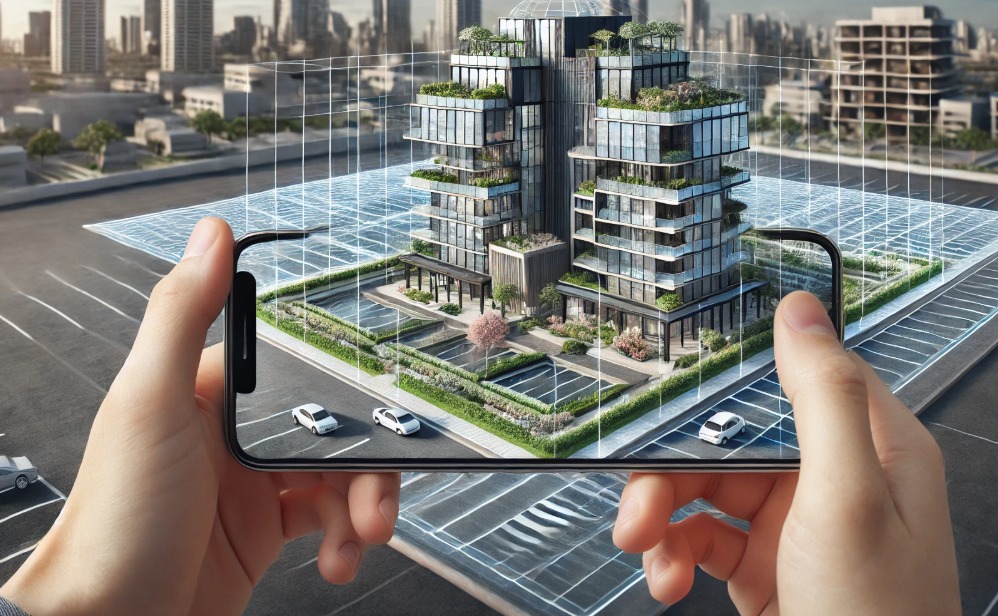
Here’s an AR visualization concept for real estate, showing a full building overlay on an empty plot of land. Let me know if you'd like any changes or additional elements included!
2. Showcasing Product Features
Product demonstrations are essential for helping customers understand how a product works. AR/VR enables businesses to take this a step further by providing immersive, on-demand demonstrations.
Instead of relying solely on in-store or trade show presentations, businesses can use AR/VR to highlight key features and benefits in a more interactive way. This not only grabs attention but also increases sales and customer satisfaction by offering a deeper understanding of the product.
3. Creating Immersive Environments
Some products are too large, expensive, or complex to demonstrate in person. AR/VR solves this problem by creating virtual environments where customers can explore and interact with products.
Virtual showrooms or trade show booths powered by AR/VR allow potential buyers to experience products as if they were physically present, making it easier for them to make confident purchasing decisions. These environments are also useful for employee training, providing a safe and controlled setting to learn and practice.
4. ‘Try Before You Buy’ Experiences
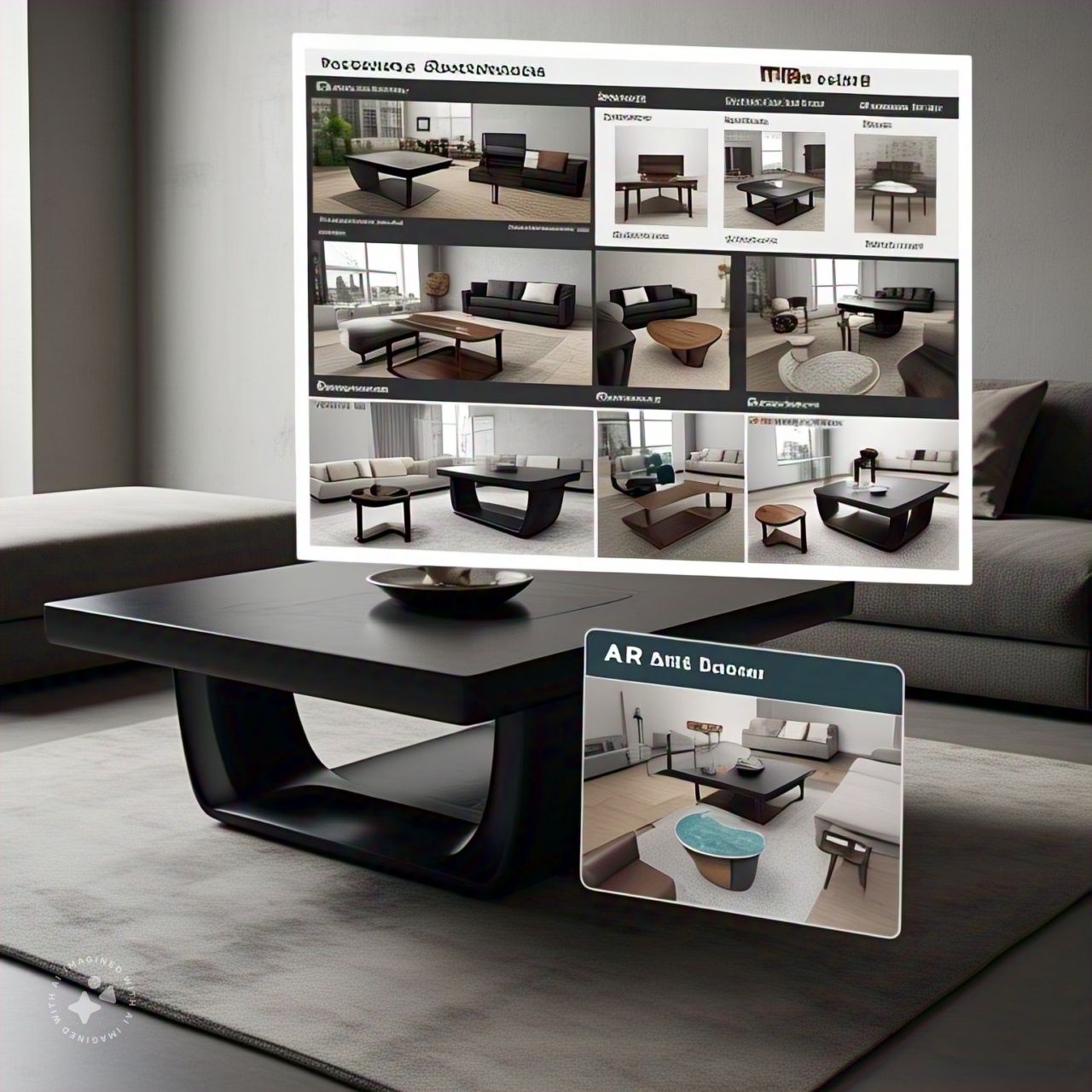
AR/VR makes it possible for customers to try products virtually before committing to a purchase. For example, a customer can use AR to see how a piece of furniture looks in their living room or VR to take a car for a virtual test drive.
This hands-on experience helps customers visualize how products fit into their lives, making it easier for them to make informed decisions.
5. Enhancing Customer Service
AR/VR is also a game-changer for customer service. By offering virtual tours of stores or products, businesses can provide customers with detailed insights before they even step inside a physical location.
For troubleshooting, AR/VR can help service representatives better understand a customer’s problem by simulating the issue, leading to quicker and more effective solutions. This level of personalized service can significantly improve customer satisfaction.
6. Creating Interactive and Personalized Experiences
AR/VR product demos are more than just a showcase—they’re an experience. Customers can interact with products, see how they work, and even customize their demo to match their needs.
This approach is especially helpful for products that require hands-on understanding, like advanced machinery or new technology. By making demos more interactive and tailored, businesses can foster stronger customer engagement and drive more sales..
More Cost-Effective and Scalable
Let’s explore the cost-effectiveness of using virtual reality (VR) and augmented reality (AR) for product demonstrations. Imagine you own 10 medical equipment stores across different states. With physical prototypes, you’d need to create 10 separate units, one for each showroom, which can be quite expensive. In contrast, developing just one 3D model is far more affordable.
For VR, all you need is a headset, while AR allows your customers to view the product using their smartphones or computers. This means there’s no need for additional devices for demonstrations.
Virtual product demos are not only easier to scale but also more cost-effective than physical ones. As a business owner, you benefit in two ways: you save money by avoiding the creation of physical prototypes, and your customers enjoy a more interactive, engaging experience.
We've only scratched the surface of the possibilities that AR and VR technologies offer. These technologies open up a wide range of opportunities for businesses that go beyond what we've discussed. To recap, here are the key benefits of AR and VR for your brand:
Personalized offers and experiences
Enhanced interactivity for customers
Increased customer engagement
Reduced product returns
Improved customer service
Greater opportunities to showcase your products
Lower prototyping costs
Additionally, integrating AR and VR into your business demonstrates that your company is innovative and in tune with the latest trends. All these factors can strengthen your brand's position in the market and boost your sales.