
Posted On: 04 Oct 2024 Posted By: Pratik Gour
Influencer Marketing vs Performance Ads: Which Drives Better Results?
We are showing this analysis on posts of 2 campaigns
As marketing strategies evolve, brands are often faced with a critical decision: should they invest in influencer marketing or opt for performance ads? While influencer marketing fosters long-term trust and engagement, performance ads offer fast, measurable results with precise audience targeting.
In two recent case studies, we explore how these strategies performed for different brands and the outcomes they achieved.
Case Study 1: Electric Inter City AC Bus Brand
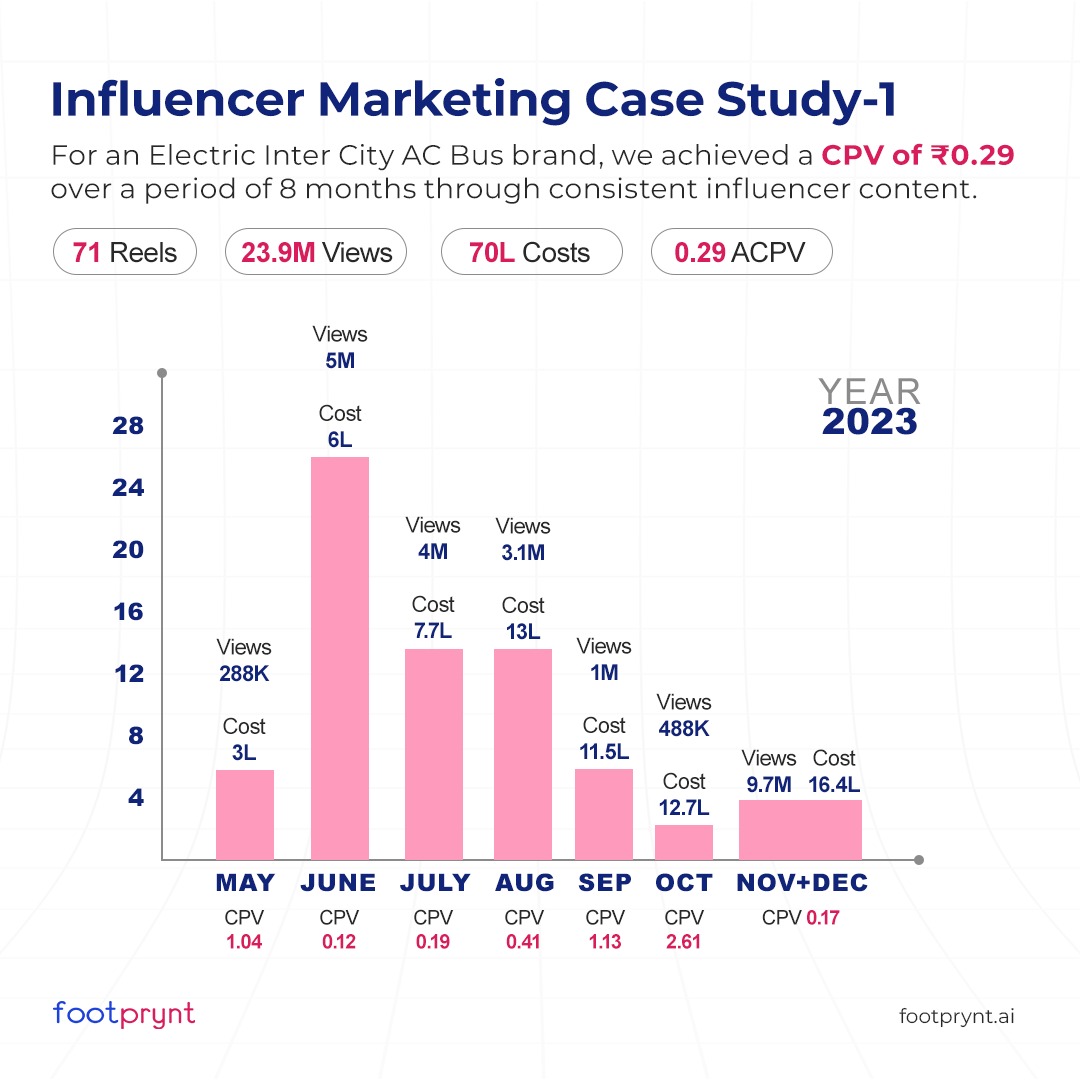
This brand utilized 71 influencer-created reels over an 8-month period, achieving an impressive 23.9 million views at a total cost of ₹70 lakh. This brought their cost per view (CPV) down to ₹0.29. Notably, June proved to be the most efficient month for this campaign, with 5 million views at an incredibly low CPV of ₹0.12.
These results clearly demonstrate the power of long-term influencer partnerships, where ongoing engagement leads to more cost-efficient outcomes as time goes on.
Case Study 2: Sports Streaming OTT Platform
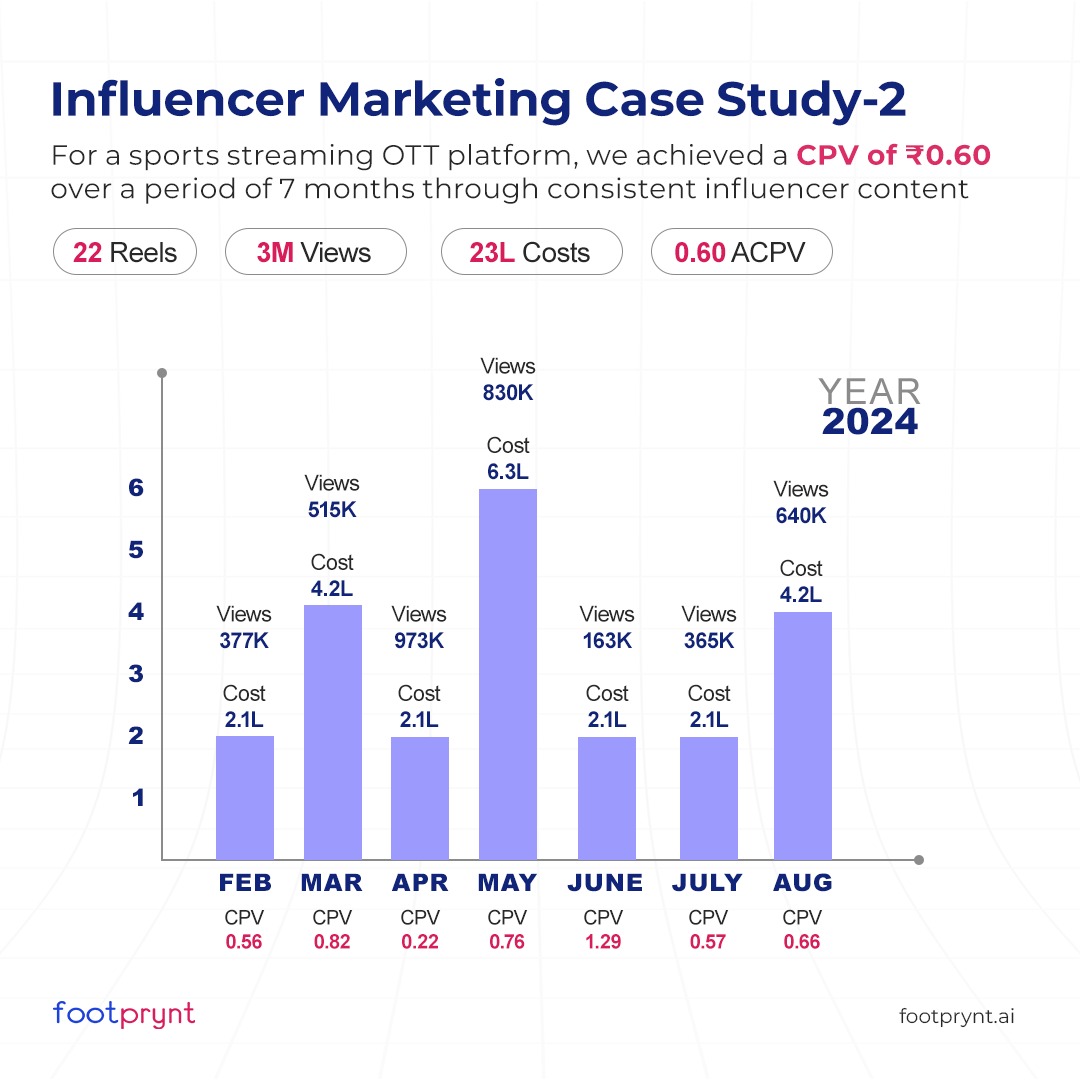
For this campaign, 22 influencer reels were released over 7 months, generating 3 million views at a total cost of ₹23 lakh, resulting in a CPV of ₹0.60. The month of April saw the best performance, with 973,000 views at a CPV of ₹0.22.
This case highlights how niche targeting and carefully timed releases can maximize the effectiveness of influencer marketing, especially for platforms catering to specific interests or demographics.
Benchmark Comparison
When comparing both influencer campaigns to traditional performance ads, the cost-efficiency becomes clear. On average, YouTube ads range from ₹0.82 to ₹2.47 per view, while Instagram ads range from ₹0.30 to ₹2. In contrast, both case studies performed better, showcasing how influencer strategies can outpace traditional ads, both in cost and engagement potential.
Conclusion
Both case studies highlight the strengths of influencer marketing. Case Study 1 demonstrates how broad reach can be achieved at a lower cost through long-term influencer relationships, while Case Study 2 underscores the value of niche targeting and well-timed content. Ultimately, these case studies show that influencer marketing, when executed effectively, can offer better cost-efficiency and engagement than traditional ad strategies, making it a compelling option for brands looking to maximize their marketing investments